
Historical Facts & Fiction
Blog categories

Faceless and Forgotten: The Lost Legacy of Madeleine Lavigne
No known photograph of her exists. No memorial bears her likeness. Yet, Madeleine Lavigne was one of the most extraordinary female agents of the Special Operations Executive (SOE), a woman who risked everything in the fight against Nazi occupation. Born on February 6, 1912, in Lyon, France, she dedicated nearly four years to resistance work—creating false identity documents, aiding Allied airmen, and eventually operating as a wireless operator under the codename Isabelle. Despite her courage, her image has been lost to history.

No known photograph of her exists. No memorial bears her likeness. Yet, Madeleine Lavigne was one of the most extraordinary female agents of the Special Operations Executive (SOE), a woman who risked everything in the fight against Nazi occupation. Born on February 6, 1912, in Lyon, France, she dedicated nearly four years to resistance work—creating false identity documents, aiding Allied airmen, and eventually operating as a wireless operator under the codename Isabelle. Despite her courage, her image has been lost to history.
Lavigne's work began at the Lyon town hall, where she used her position to forge documents for those in danger. By 1943, she had become more deeply involved, acting as a courier and providing shelter for SOE agents like Henri Borosh. When the Gestapo closed in, she was forced to flee to England, where she underwent para-military and wireless training before parachuting back into France in May 1944 to establish the Silversmith network in Reims.
Her mission was critical—she kept vital communication lines open, coordinated supply drops, and ensured that resistance efforts remained strong in the final months of the war. When Reims was liberated in August 1944, she was reunited with her children in Paris. But instead of living to see peace fully restored, she passed away on February 24, 1945, from an embolism, leaving behind a legacy that, without images or widespread recognition, has faded into obscurity.
Though history has erased her face, her courage endures. Madeleine Lavigne was posthumously honored with the King’s Commendation for Brave Conduct and the King’s Medal for Brave Conduct, a testament to her silent yet vital contribution to the war effort. But beyond official records, she remains a ghost of history—one of the many women who fought and died without the world ever truly knowing their names, let alone their faces.
Perhaps that is why remembering Madeleine is so important. Because heroines should not remain faceless. Because their sacrifices should never be forgotten. Wait until you’ll find out how a modern-day Marianne Latour pursues Madeleine’s picture in “The Shadow of Silence, Codename Isabelle”.


New Recipe Book: A Taste of Wartime Cooking
I’m thrilled to announce the release of my new recipe booklet, A Taste of Wartime Cooking: Wartime Recipes for the Modern Kitchen. This collection of 15 recipes is inspired by the incredible resilience and resourcefulness of those who cooked during the Second World War. It’s free to download. Come grab your copy here!

I’m thrilled to announce the release of my new recipe booklet, A Taste of Wartime Cooking: Wartime Recipes for the Modern Kitchen. This collection of 15 recipes is inspired by the incredible resilience and resourcefulness of those who cooked during the Second World War. It’s free to download, and you can grab your copy here: Download the RecipeBook.
Why Wartime Recipes?
During WWII, rationing forced cooks to get creative, making the most of every ingredient while stretching rations to feed their families. Despite these challenges, they managed to create meals that were not only practical but also comforting and delicious. This booklet pays tribute to their ingenuity and the simple but hearty dishes that became staples of the time.
The recipes in this collection range from savory favorites like Cold Meat Pasties and Guernsey Potato Peel Pie to sweet treats like Brown Betty and Wartime Chocolate Layer Cake. Each one is a small piece of history, adapted to be recreated in your own kitchen with modern ingredients.
How This Booklet Came to Be
The idea for this recipe collection began in my Facebook Reader Group, where I shared wartime recipes during our December theme. The response was overwhelming, with so many of you sharing your enthusiasm and even trying out the dishes yourselves. It was clear these recipes resonated, and I wanted to gather them into a single, easy-to-access booklet as a way of continuing the conversation and celebrating this shared love of history and food.

What’s Next?
This is just the beginning! I plan to create a second recipe booklet next December, featuring even more wartime-inspired dishes as we revisit this theme in the Reader group. In the meantime, I’d love to hear your feedback—what recipes did you enjoy most, how did they turn out, and what would you like to see in the next collection?
Get Your Free Copy!
Download your free copy of A Taste of Wartime Cooking: Wartime Recipes for the Modern Kitchen here: https://BookHip.com/WHDKCCX.
Thank you for joining me on this journey into the kitchens of the past. Let’s honor the creativity and resilience of those who came before us while sharing the joy of cooking with loved ones today.
Happy cooking!
Hannah Byron

January’s Brave Souls of the SOE
As we step into 2025, I invite you to join me on a year-long journey to honor the extraordinary women of the Special Operations Executive’s (SOE) Section F. These courageous women risked everything to fight for freedom during World War II, their bravery, resilience, and sacrifices becoming a lasting testament to the human spirit in the face of tyranny. Each month, I’ll commemorate the birthdays of these 39 remarkable agents who served in France, often at great personal cost.
As we step into 2025, I invite you to join me on a year-long journey to honor the extraordinary women of the Special Operations Executive’s (SOE) Section F. These courageous women risked everything to fight for freedom during World War II, their bravery, resilience, and sacrifices becoming a lasting testament to the human spirit in the face of tyranny.
Each month, I’ll commemorate the birthdays of these 39 remarkable agents who served in France, often at great personal cost. By the end of the year, we’ll have remembered them all—each story, each life, each sacrifice.
This tribute ties into my passion for bringing their daring missions to life in my Timeless Agents series, which pairs the journeys of these wartime heroines with fictional contemporary women who navigate their 21st-century challenges. Through these dual timelines, I explore themes of female courage, resilience, and the enduring impact of history on our present lives.
January begins with a poignant reflection. Of the seven agents born this month, only two survived the war. The five others lost their lives in the fight for liberty.
These secret agents should never be forgotten. By sharing their stories, we ensure their courage lives on, igniting a sense of gratitude and admiration in every generation. They inspire my writing and research and remind me daily why their legacy is worth preserving. Let their memory remind us of the values they fought for—freedom, justice, and hope—and inspire us to uphold them in our own lives.

Noor Inayat Khan, born on January 1, 1914, in Moscow and of Indian descent was a princess by birth. Trained as a wireless operator by the Special Operations Executive (SOE) she was sent into occupied France in June 1943 with the code name Madeleine, despite being a pacifist by nature. Dodging the constant threat of capture, Noor’s unwavering commitment to her mission for the CINEMA network exemplified her extraordinary courage. Tragically, she was betrayed, captured by the Gestapo in October 1943, and after a horrendous year of captivity and many escape attempts, was executed at Dachau concentration camp on September 13, 1944. Posthumously, Noor was awarded the George Cross, reflecting the profound impact of her sacrifice in the pursuit of freedom.

Maureen Patricia O’Sullivan, known as “Paddy,” was born on January 3, 1918, in Dublin, Ireland. Fluent in French, she was recruited by SOE to serve as a wireless operator in occupied France. Parachuting into France in March 1944, with codename Josette, she played a crucial role in the FIREMAN network. Despite the constant danger, Paddy’s resilience and dedication were instrumental in supporting the French Resistance. Remarkably, she was the only SOE female agent born in January to survive the war. For her bravery, she was awarded the Member of the Order of the British Empire (MBE) and the French Croix de Guerre.

Yolande Elsa Maria Beekman, born on January 7, 1911, in Paris to a Swiss father and English mother, moved to London as a child, becoming fluent in English, German, and French. During World War II, she joined the Women’s Auxiliary Air Force (WAAF) and trained as a wireless operator. Her linguistic skills and technical expertise led to her recruitment by the SOE. In September 1943, under the codename “Mariette,” she was deployed to France as a wireless operator for the MUSICIAN network. Despite the constant threat of detection, she maintained vital communications between the Resistance and London. In January 1944, Beekman was arrested by the Gestapo, endured harsh interrogations, and was eventually deported to Dachau concentration camp, where she was executed on September 13, 1944. Her unwavering bravery and sacrifice were posthumously honored with the Croix de Guerre and a Mention in Dispatches.

Yvonne Claire Rudellat, born on January 11, 1897, in Maisons-Laffitte, France, became the first female SOE-trained agent to be deployed to France during World War II. Operating under the codename “Jacqueline,” she served as a courier for the PROSPER network, facilitating communications and coordinating sabotage efforts against German forces. Her dedication and bravery were instrumental in supporting the French Resistance. In June 1943, Rudellat was captured by the Germans and endured imprisonment under harsh conditions. Tragically, she succumbed to typhus in Bergen-Belsen concentration camp on April 23 or 24, 1945, shortly after the camp’s liberation. In recognition of her valor, she was posthumously appointed a Member of the Order of the British Empire (MBE).

Yvonne Jeanne de Vibraye Baseden, born on January 20, 1922, in Paris, was one of the youngest and most resilient female agents of the Special Operations Executive (SOE). Fluent in multiple languages, she served as a wireless operator for the Scholar circuit in France, where she demonstrated remarkable courage under the constant threat of discovery. Captured by the Gestapo in 1944, Yvonne endured solitary confinement and later the horrors of Ravensbrück concentration camp. Miraculously, she survived and was liberated in April 1945. Post-war, she was honored with the MBE and multiple French distinctions, including the Legion of Honour and the Croix de Guerre, a testament to her bravery and dedication to the Allied cause.

Denise Madeleine Bloch, born on January 21, 1916, in Paris, was a courageous French-Jewish SOE agent. After her family evaded Nazi persecution by relocating to Lyon, Denise joined the French Resistance, demonstrating exceptional bravery as a courier and wireless operator for the CLERGYMAN network. In March 1944, codenamed Ambroise, she was clandestinely flown into central France to support sabotage missions against German forces for the DETECTIVE network. Unfortunately, in June 1944, Denise was captured by the Gestapo and endured severe interrogations. Deported to Ravensbrück concentration camp, she was executed on February 5, 1945. Her unwavering dedication and sacrifice were posthumously honored with the Légion d’honneur, Médaille de la Résistance, and Croix de Guerre and King’s Commendation for Brave Conduct.
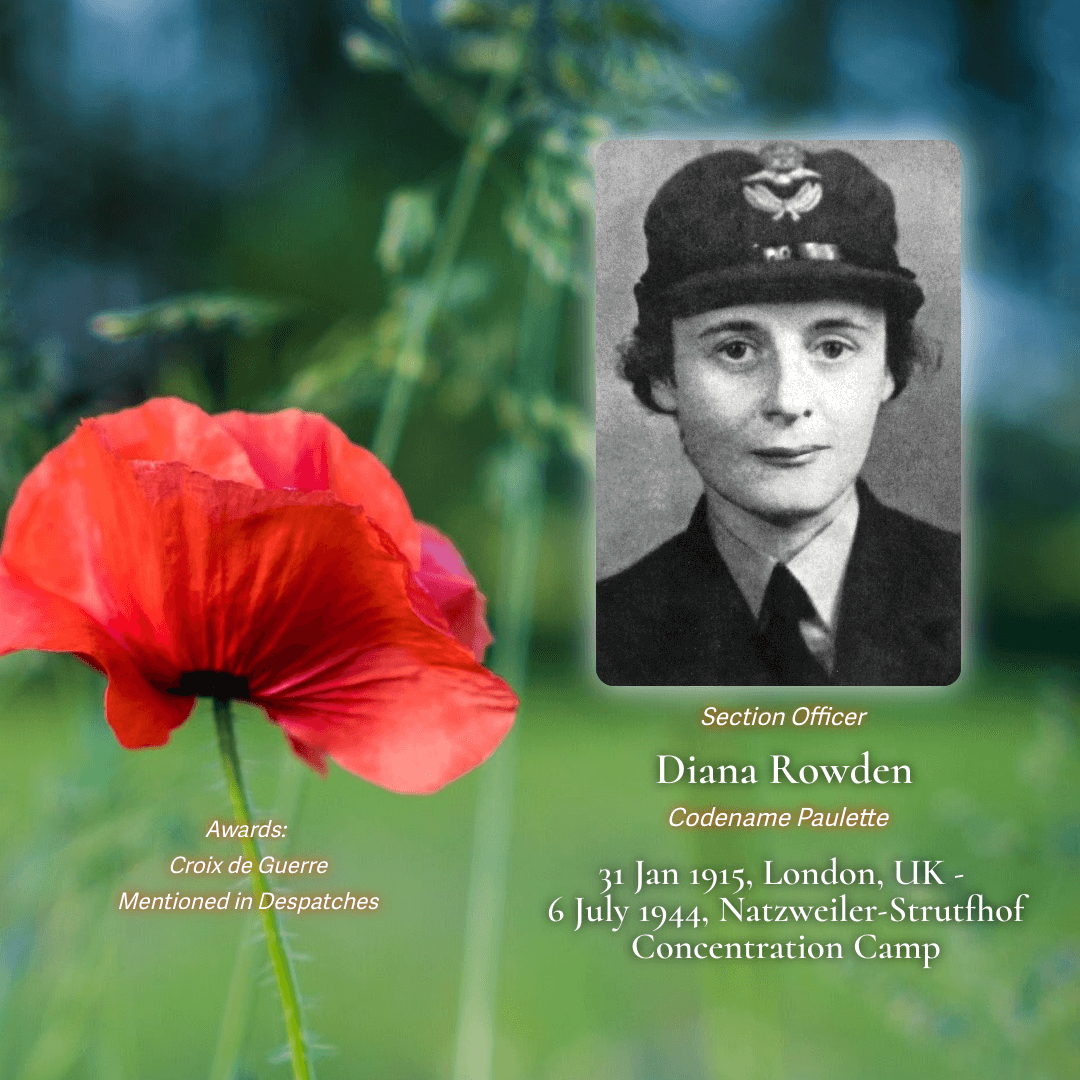
Diana Hope Rowden, born on January 31, 1915, in England, joined the Women’s Auxiliary Air Force (WAAF), before being recruited by the SOE and deployed to France in 1943 as a courier for the ACROBAT network, operating under the codename Paulette. Her work involved coordinating sabotage efforts and maintaining vital communications to disrupt German operations. In November 1943, Rowden was arrested by the Gestapo and later deported to Natzweiler-Struthof concentration camp, where she was executed on July 6, 1944. Her bravery and sacrifice were posthumously recognized with the Croix de Guerre and a Mention in Despatches.
Though January’s record was harrowing, most months will thankfully see more survivors.

Now Available: The Resistance Girl Series Books 5–8
My personal journey with these eight courageous women, spanning the two World Wars, has been transformative as a writer. I crafted each heroine with all the love and skill I could muster. Each ‘resistance girl’ reflects her own kind of bravery, love, and sacrifice.
This collection closes the chapter on The Resistance Girl Series, a project that took five years to complete and has left a profound mark on my heart.
I’m thrilled to share the second Resistance Girl Series box set, featuring books 5–8, now available for eBook readers at an incredible price—less than 10 dollars, pounds, or euros! Over 1600 pages of gripping stories. For Kindle Unlimited readers, this box set is a perfect one-click addition to your library.

My personal journey with these eight courageous women, spanning the two World Wars, has been transformative as a writer. I crafted each heroine with all the love and skill I could muster. Each ‘resistance girl’ reflects her own kind of bravery, love, and sacrifice.
This collection closes the chapter on The Resistance Girl Series, a project that took five years to complete and has left a profound mark on my heart. Through these fictive women, inspired by real stories and set against true historical backdrops, I hope I’ve brought to life some of the untold stories of female resilience, resistance, and heroism—stories I believe will resonate again in today’s volatile political climate.
Here’s a glimpse of the final four books:
In The Highland Raven, Sable’s story delves into love, loss, and redemption as she fights to reclaim her agency and heal from past wounds—her courage still lingers with me.
The Crystal Butterfly allowed me to explore the grace and strength of Edda, a Dutch ballerina torn between family legacy and resistance, her resilience shining like the art she loves.
Anna, in The London Spymaker, remains one of my most complex heroines: a woman of steely professionalism and hidden vulnerability whose story touched me profoundly.
Finally, in The Resistance Girls Revisited, all eight heroines (including the five from Books 1–4) meet for a moving reunion in the Swiss Alps in 1948, sharing their stories of courage and friendship.
As I bid farewell to this series, I invite you to join my heroines one last time. Their journeys of love, sacrifice, and bravery will inspire you, reminding us that even in the darkest times, hope always prevails.
And where one story ends, another begins! I’m now fully immersed in the Timeless Agents series—stay tuned for more WWII female-empowerment adventures!

Virginia Hall, aka “The Limping Lady”
Perhaps Virginia Hall, already drawn to life in Europe as an aspiring diplomat, felt inspired by Saint Cuthbert’s modesty and resilience. Long before she joined the resistance, Hall worked toward a diplomatic career across European countries, a path that would later transition into her life of espionage.

Virginia Hall
Virginia Hall, an American secret agent during World War II, became legendary for her courage, resourcefulness, and ability to evade capture. After a hunting accident in Turkey in 1933, Hall lost her left leg and was later fitted with a wooden prosthetic in her hometown of Baltimore, Maryland. She nicknamed her leg “Cuthbert,” and after learning to walk again, she herself earned the nickname “the Limping Lady.”

Saint Cuthbert's piece of timber
Why Hall chose the name of a 7th-century Anglo-Saxon monk, Saint Cuthbert, for her prosthetic leg is unknown, but there are clues that might help explain the connection. Saint Cuthbert was an esteemed clergyman in the monasteries of Melrose and Lindisfarne in the Kingdom of Northumbria, in present-day northern England and southern Scotland. Revered as the patron saint of Northumbria, he was respected by kings and clergy alike, yet he chose a life of humble service. According to legend, he used a piece of driftwood, washed ashore by the tide, as the foundation for his hermit’s retreat.
Perhaps Virginia Hall, already drawn to life in Europe as an aspiring diplomat, felt inspired by Saint Cuthbert’s modesty and resilience. Long before she joined the resistance, Hall worked toward a diplomatic career across European countries, a path that would later transition into her life of espionage. The “foundation” Saint Cuthbert’s timber provided for his simple abode might also have resonated with Hall, as her own “Cuthbert” supported her through difficult missions in hostile territory.
During the war, Hall became a key operative for the British Special Operations Executive (SOE) in Nazi-occupied France, particularly in Lyon and surrounding areas. There, she helped organize resistance networks, plan sabotage missions, and facilitate the escape of Allied soldiers. Her work was so impactful that the Gestapo labeled her “the most dangerous of all Allied spies.”
One notable incident involved Hall’s daring trek across the Pyrenees as she fled to Spain to escape capture. Knowing that her wooden leg could be a hindrance, she sent a message to SOE headquarters, noting that “Cuthbert might cause problems.” Unaware that “Cuthbert” was her prosthetic leg, her superiors replied pragmatically: “If Cuthbert troublesome, eliminate him.”
Virginia Hall’s resilience and determination, along with her ability to overcome immense personal challenges, make her an extraordinary figure in the history of WWII. In my Timeless Agents series, I look forward to honoring her with a dedicated book, The Pace of Power, somewhere down the line.

Nancy Wake: The Legendary “White Mouse”
Nancy Wake - a name that still strikes awe among World War II enthusiasts - was a woman of unmatched bravery, charm, and cunning. Her story is a blend of daring escapes, secret missions, and a fierce determination to defeat the Nazis. But how well do you really know her?
Nancy Wake (1945)
Exciting Monthly Themes in the Hannah Byron Reader Group!
Starting in November, I’m bringing something new and fun to my Facebook Reader Group! Each month, we’ll dive into a special WWII theme with engaging quizzes, nostalgic throwback photos, exclusive giveaways, puzzles, and behind-the-scenes stories from history. We’ll also celebrate each other’s birthdays and share our current reads and recommendations—perfect for expanding our TBR lists with friends!
Since my reader group feels like my go-to crew, I’m thrilled to spend more time with everyone there. Will you join in?
We’re kicking off November with Secret Agent Trivia! To get ready, check out the blog post on Nancy Wake below and brush up on her story—you’ll be quizzed on Monday, November 4.
Join me in the Hannah Byron Reader Group here! Looking forward to seeing you there!
Nancy Wake: The Legendary “White Mouse”
Nancy Wake - a name that still strikes awe among World War II enthusiasts - was a woman of unmatched bravery, charm, and cunning. Her story is a blend of daring escapes, secret missions, and a fierce determination to defeat the Nazis. But how well do you really know her?
Let’s take a quick dive into the life of this remarkable SOE agent, whose nickname, “The White Mouse”, came from her ability to slip through the clutches of the Gestapo, time after time. But wait—wasn’t there another famous SOE agent with a similar moniker? Maybe you’re thinking of F.F.E. Yeo-Thomas, also known as “The White Rabbit.”
Well, there’s little evidence the two “White Ones” ever met…
Nancy Wake was more than just a master of disguise and a fearless leader—she was a woman of resilience and courage, with roots as diverse as her accomplishments. Did you know she had Māori ancestry? Born in New Zealand and raised in Australia, Wake carried with her a mix of cultures that fueled her defiant spirit. From her early years, she had a strong sense of justice, which later drove her to become one of the most wanted women by the Nazis.
In the early days of World War II, Nancy Wake and her French industrialist husband, Henri Fiocca, lived in Marseille, where they were part of the French Resistance. Nancy played a vital role in the Pat O’Leary Line, an escape network that helped downed Allied soldiers and prisoners of war flee occupied France. She risked her life multiple times, assisting in the smuggling of soldiers across the Pyrenees to Spain, and soon became the Gestapo’s top target.
After she had to flee France herself in 1943, her husband Henri stayed behind to continue their resistance work, but tragically, he was captured and killed by the Nazis, a devastating blow for Nancy that she would not learn about until after the war.
Her most famous adventure began when she was parachuted into France in April 1944 as part of the Special Operations Executive (SOE). She landed in a tree and, ever quick-witted, responded to local Maquis leader Henri Tardivat’s quip about her appearance by telling him to “cut out the French crap and get me out of this tree!” That sharp humor and steely demeanor were trademarks of Nancy Wake, whose role was to organize the Resistance fighters and help prepare for D-Day by leading guerrilla operations against the Nazis.
As a resistance leader, Nancy Wake was responsible for everything from coordinating arms drops to leading attacks on German installations. She also recruited and trained thousands of Maquis fighters in the Auvergne region. Her leadership wasn’t just tactical—it was personal. Her men knew her as both hard and fair, and when a German female spy was found among their ranks, Nancy gave the order for her execution, displaying the harsh realities of war.
One of the most famous stories about Nancy is whether she killed a German soldier with her bare hands. The story goes that during a raid on a German factory, a sentry was about to raise the alarm when Nancy, trained in hand-to-hand combat, used a judo chop to kill him. Whether this happened exactly as told continues to remain a subject of debate, with some historians suggesting it may have been a part of the legend that grew around her. But as Nancy herself put it, she was “quite surprised that it worked!”
In the field, Nancy operated under the codename “Hélène” and led some of the most daring operations of the war. One of her greatest feats was a 500-kilometer round trip by bicycle through enemy territory to deliver critical codes for the SOE—a journey she completed in just 72 hours. This sheer act of endurance is one of many reasons why she is remembered as one of the most fearless women of the war.
After the war, Nancy Wake was showered with medals for her bravery, including the George Medal from the UK, the Croix de Guerre from France, and the Medal of Freedom from the United States. Yet, despite her heroism, she was never awarded a medal by her home country, Australia, which she refused to accept later in life, declaring she would never take a medal from them after their neglect.
Nancy Wake’s story didn’t end with the war. She lived a full and adventurous life, writing her autobiography and becoming involved in politics, although she never won an election. Her impact, however, went far beyond politics—her courage, strength, and indomitable spirit left a mark on history, and her legacy continues to inspire.
Somewhere in the coming years I will write The Ace of Spunk, Codename Hélène and honor Nancy Wake with my own dual-timeline story about her. For now, head on over to join my Reader Group on Facebook for a pop-quiz on #MysteryMonday about The White Mouse and partake in the other activities. You can find the Hannah Byron Reader Group on Facebook here.

🎉 The Color Of Courage is Live 🎉
Some stories grip your heart and won’t let go. For me, that’s the Timeless Agents series—a tribute to the extraordinary women of the Special Operations Executive (SOE) Section France. Over the next 13 years, I’m committed to telling the stories of 39 unsung heroines who risked everything behind enemy lines during WWII.
The day has finally come! The Color of Courage, the first book in my Timeless Agents series, is officially live. This project has been a true labor of love, and with - so far - positive feedback from my advanced reader team, I’m hopeful Lise's and Sil's stories will resonate with you, too.
Some stories grip your heart and won’t let go. For me, that’s the Timeless Agents series—a tribute to the extraordinary women of the Special Operations Executive (SOE) Section France. I’m committed to telling the stories of 39 unsung heroines who risked everything behind enemy lines during WWII. This is more than a writing project—it's my life’s work, a personal mission to honor their courage and their wit. So, yes, the Timeless Agents series could well turn out to be my magnum opus. But why?
A Personal Connection to History
As a French-born Brit with parents who lived through the war, I’ve always felt the pull of those untold stories. The women of the SOE weren’t soldiers; they were ordinary women called to do extraordinary things—operating in the shadows with courage and cunning. That mystery, that resilience, resonates deeply with me.
The Allure of Female Heroism
My fascination with strong women comes from my own family. My grandmother, a woman who fought for her daughters’ education despite societal limits, inspired me to spotlight the fierce, independent women in history. The SOE agents broke barriers and shattered glass ceilings—exactly the kind of heroines I want to celebrate.
Resilience in the Face of Loss
This mission is personal for me in another way too. My family has known loss, from war to illness, for four generations. When I lost my daughter to cancer in 2014, I came to understand resilience at a whole new level. The courage these women showed during the war mirrors the strength I’ve seen—and lived—in my own life. That’s why their stories must be told.
Why These Stories Matter
Not all the SOE agents are household names, but each one deserves to be. That’s why I’m starting with the lesser-known women, the ones history overlooked. Their sacrifices are no less important, and I’m determined to give them the spotlight they’ve long deserved.
My Magnum Opus
If I’m lucky, I’ll finish this series at 81. It’s a daunting task, but one I’m ready to embrace. These women’s stories need to be told, and as long as I can write, I will. This is my mission, my magnum opus, and I can’t wait for you to join me on this journey.

The Color of Courage, the first book in the Timeless Agents series about Lise de Baissac, is now available.

I’m Not a Spy! Understanding the True Role of SOE Agents
The agents themselves never saw it that way. To them, "spy" was a dirty word, often tied to the betrayal of one's country, while they were fiercely patriotic.
Yes, the SOE agents gathered intelligence, but that was just one of their many jobs. They were so much more…
As I'm writing my new series, I’ve realized something important about the brave men and women of the Special Operations Executive (SOE) during WWII. Everywhere I look—book titles, documentaries, movies, even titles by renowned historians—I see the word "spy" being used.
"Spy" is such a catchy, almost romantic term, and believe me, I would have loved to use it. But here’s the thing: the agents themselves never saw it that way. To them, "spy" was a dirty word, often tied to the betrayal of one's country, while they were fiercely patriotic.
Yes, the SOE agents gathered intelligence, but that was just one of their many jobs. They were so much more—they organized supply lines, aided the French Resistance, and carried out sabotage missions, all to prepare for D-Day.

With this in mind, I decided to change the title of my series from Timeless Spies to Timeless Agents. While you, my readers, might see "spy" being used everywhere, I want to make sure I honor the legacy of these legends. The way they really saw themselves.
So, in my work they will only be called SECRET AGENTS.
If all goes well, the Timeless Agents series will ultimately honor all 39 female secret agents of Section France.
One week now until the first book, The Color of Courage, goes live. Oh, it's so exciting.
Part of my library on SOE
Here's an early 5-star review from one of my ARC team members:
"I’ve read all of Hannah’s books and enjoy the way that she mixes fact and fiction. This particular book tells the story of one of the bravest SOE agents intertwined with a modern day romance. This series will bring the actions of Resistance fighters to a brand new audience." ~ Fiona
If you haven't preordered The Color of Courage yet, click the link! 👇😊

📣New release📘The Resistance Girls Revisited
I am thrilled to announce that The Resistance Girls Revisited is finally live and available in ebook, paperback, and on Kindle Unlimited. This book marks the great finale of The Resistance Girl Series, a writing journey that’s been four and a half years in the making. It is a day filled with both smiles and tears.

I am thrilled to announce that The Resistance Girls Revisited is finally live and available in ebook, paperback, and on Kindle Unlimited. This book marks the great finale of The Resistance Girl Series, a writing journey that’s been four and a half years in the making.
Today is especially poignant for me and my family, as I publish book 8 in the series on what would have been my daughter's 40th birthday. It is a day filled with both smiles and tears, as we lost her ten years ago, as I told you last week.
I truly hope you enjoy this final installment in The Resistance Girl Series. I put my heart and soul into it.
Don’t forget to leave a review!
Happy reading,
Hannah Byron
Current running discount still available up to and including 17 Juli 2024!

This is not the end
I wouldn’t pay enough tribute to The Resistance Girl Series if I didn’t spend some time reflecting on the finale of the series. I could have gone on and on, but something happened when I was writing The Norwegian Assassin. My research kept circling me back to SOE (Secret Operations Executive). At that moment, I knew I would transition from the posh ladies’ finishing school in Switzerland to the die-hard spy school in Britain. It seemed my writing fate was sealed.
The Resistance Girls Revisited and what’s next?
I often compare the work of an author with that of a fashion designer. By the time a book comes out, I’m already fully immersed in writing the next one, and it’s almost hard to “sell” the upcoming book because new characters are occupying my every day.
But I wouldn’t pay enough tribute to The Resistance Girl Series if I didn’t spend some time reflecting on the finale of the series and the period of four-and-a-half years I dedicated to writing this 8-book series.
The first book “In Picardy’s Fields” came out in September 2020, but I started writing this story at the end of 2019. Since then, I’ve written every day (1650 days) until the completion of this first series (960,000 words). Initially I planned to write a trilogy and finish it in 2021. It went somewhat out of hand. ☺
By book 3, the series began to find an audience and as there was not yet a new series brewing in my head, I decided I’d have another girl attending the finishing school Le Manoir in Switzerland. And then another… and yet another.
I could have gone on and on, but something happened when I was writing The Norwegian Assassin. My research kept circling me back to SOE (Secret Operations Executive), and I made Esther, the heroine of book 4, a secret agent trained by SOE, followed by book 5 The Highland Raven. Sable was also an SOE agent.
Only book 6 had a different topic. Based in Holland, I wanted to write a book about the Dutch Resistance. But the final resistance girl, Anna in The London Spymaker is a fictionalized retelling of Vera Adkins, the SOE spymistress at the Baker Street HQ in London.
It seemed my writing fate was sealed.
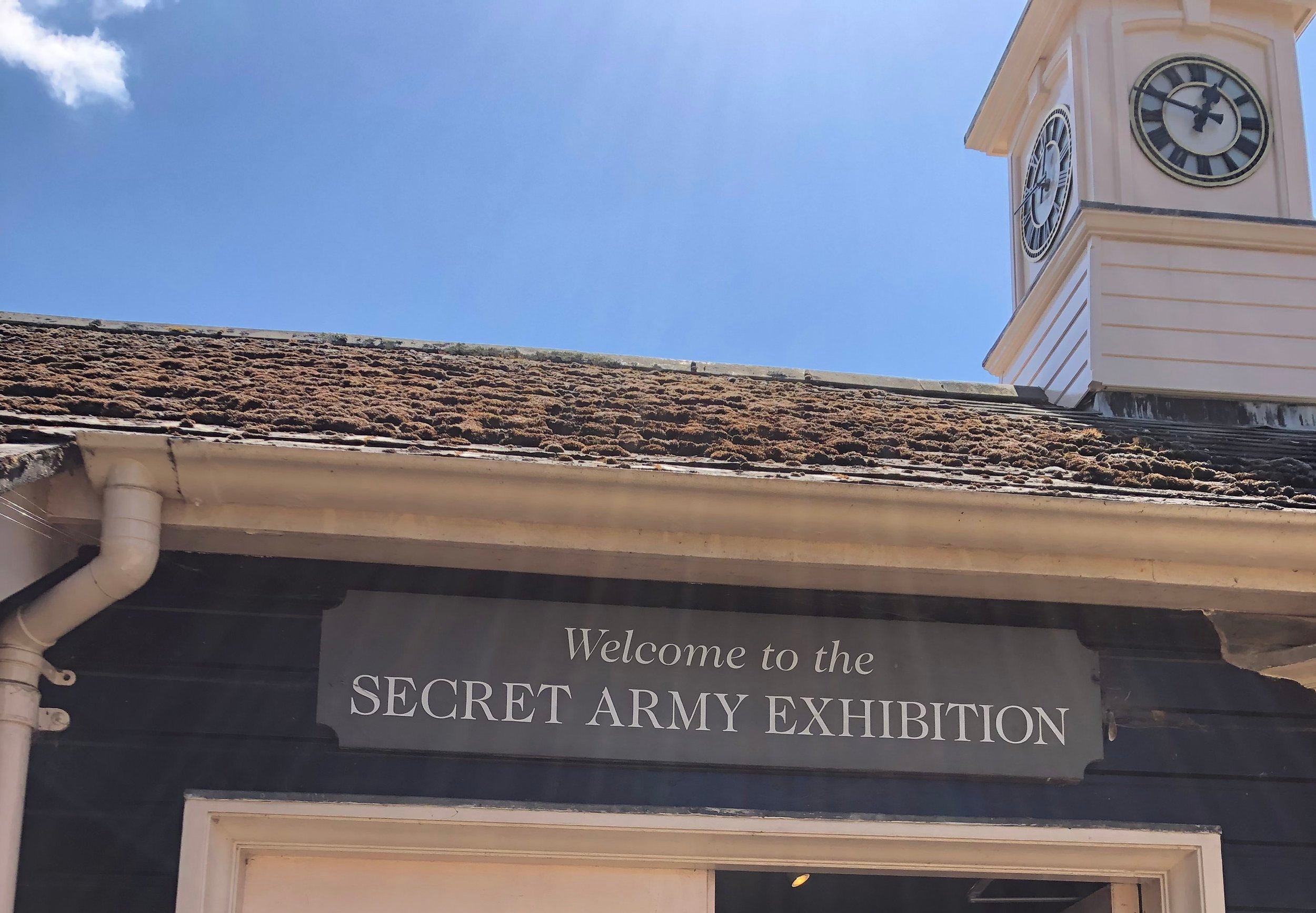
Two years ago, I went on a research trip to Beaulieu in Hampshire, England, with my eldest son. Beaulieu was the SOE “finishing school” for secret agents during WW2. At that moment, I knew I would transition from the posh ladies’ finishing school in Switzerland to the die-hard spy school in Britain, and my next series would revolve around the 39 women who became secret agents in France.
I was born in France, but I’m of British lineage, and these two countries, these two nationalities, determine who I really am. And World War 2 was the catalyst that led to my birth as my uncle landed on the beaches of Normandy in 1944 and my parents met each other through this uncle in 1949.
The Resistance Girl Series was about fictive resistance women. Timeless Spies will be about real resistance women. The research material, the setting, the deeply emotional and heart-breaking female odysseys through the war will be the same, but the writing for me is different.
For the first time in my writing career, I’m portraying heroines who really lived, and it is my solemn task to bring them to life for you.
Today in 2024, none of these female agents is alive anymore, but the memories of their brave missions still linger. My tribute to the SOE women must be as profound as my admiration for them is. I want this tribute to stand the test of time. Let them not be forgotten, these shadow fighters for the freedom of Europe.
But what about The Resistance Girls Revisited? Why did I write this sequel to the series? This is a book specifically written for the fans. It offers you one last glimpse at the individual stories of your beloved heroines who sprouted from my imagination. As “the girls” travel to the place where they met for the first time, the finishing school Le Manoir on Lake Geneva in Lausanne, we wave one final farewell to them.
Now we let Agnès, Madeleine, Lili, Océane, Esther, Sable, Edda and Anna go to raise their families and wish them a long and happy life. We hope for them that the war in which they fought so hard for liberation will slowly become a distant memory no longer haunting them.
And we welcome women like Lise, Eileen and Diana and the 36 others in the Timeless Spies Series.
I write about war because I deeply, deeply care about peace. Lest we forget.

On a personal note..
For decades I suppressed my longing to return to my first love, penning stories, as I went through life being an obedient citizen, doing the job, raising the kids, looking after an ageing mother, forcefully silencing the characters in my head that wanted to jump onto the page.
And then on a spring morning in 2014 my life stopped. My heart broke and nothing made sense anymore.
Why I write what I write
The first slogan I used on my writer's website was: “I have been writing since I could hold a pen and I will write till my dying day.” Writing has always been more than a passion; it has been a lifeline.
So how come, you may think, it took me over fifty-five years to become a published author and sixty-five years until I could call myself a full time author? The answer is simple: like so many of my fellow authors I held the deep conviction that my writing wasn’t good enough for publication.
Always an avid reader I could see the fallacy of my belief about my own work – as it was up to standard. But if there’s one common trait among authors, even the most-praised, bestselling authors, it is that our work ‘just isn’t good enough’. The impostor syndrome is rampant among all creatives, and so also among authors.
Yet, the other side of the coin is as resilient. I can’t live without writing. Let me tell you how I found out this truth about myself.
For decades I suppressed my longing to return to my first love, penning stories, as I went through life being an obedient citizen, doing the job, raising the kids, looking after an ageing mother, forcefully silencing the characters in my head that wanted to jump onto the page.
Later, later, later! I told myself, seeing the time ticking away and author friends climbing the charts.
And then on a spring morning in 2014 my life stopped. My heart broke and nothing made sense anymore. I lost my beloved daughter Joy at the age of 29 after her heroic fight against cancer.
In the midst of this unbearable pain, writing became my lifeline. Broken words on the page, tears, devastation, unbelief, horror and so much pain. Diary entries, shards of poems, deep, angry prayers to God to make it undone, to turn back time, to make me, my family, our lives whole again.
It didn’t happen. Another child, my second, became seriously ill with another form of cancer only three months later. He too walked along the narrow edge of death but escaped for a while. Still here, still…
Then three years later my sister passed, my mother passed. The dog, the cat. The 2010s for me were the decade of doom. Death was destroying the very fabric of my life.
And yet, through it all, the words were like small anchors. They told me I still existed. Somewhere deep inside there was still a well of words.
“In the beginning was the Word, and the Word was with God, and the Word was God”. That’s how it felt to me. If I had to make peace with my God over the loss of my child and all my other losses, I had to write. Not about Joy, not about myself, but about the deep, scarred and scary emotions that make us human. That makes us carry on when we don’t want to carry on anymore. When all we can see is darkness and despair. To hang on to that one grain of fighting force and faith that still simmers within us.
Do you now understand why I write about Resistance women in WW2? They fought, they lost, they scrambled to their feet again, they found love and made peace with their fate. All my heroines will go through the darkness to the light, whether they survive or not. And thus, my own experience has found itself onto the pages of my novels. As one reader so poignantly said, “Your description of grief and love are so overwhelmingly profound.”
I cannot write otherwise.
On 16 July 2024 the final book in The Resistance Girl Series sees the light. Forty years earlier, on 16 July 1984, I gave birth to a perfect little girl named Joy Sareeta. The sun rose in the summer sky and the larks sang at the top of their lungs. I cried with happiness on the day I became a mother.
On 16 July 2024 I’ll be thankful for the words on the page and the books I published. I will write till my dying day.
Hannah Byron

Exciting News: The Resistance Girl Series Celebration Sale!
A special celebration in honor of the release of the final book in The Resistance Girl Series, titled The Resistance Girls Revisited, coming out on 16 July 2024.
Book 8 marks the culmination of a journey that began with the first tale of female bravery, camaraderie, and resilience, In Picardy’s Fields in September 2020, and ended with The London Spymaker in April 2024.
To commemorate this milestone, I'm offering a special promotion on the entire series.
I am thrilled to announce a special celebration in honor of the release of the final book in The Resistance Girl Series, titled The Resistance Girls Revisited, coming out on 16 July.
Book 8 marks the culmination of a journey that began with the first tale of female bravery, camaraderie, and resilience, In Picardy’s Fields in September 2020, and ended with The London Spymaker in April 2024.
📚 Thank you so much for 50,000 copies sold and 20 million page reads! 🎉
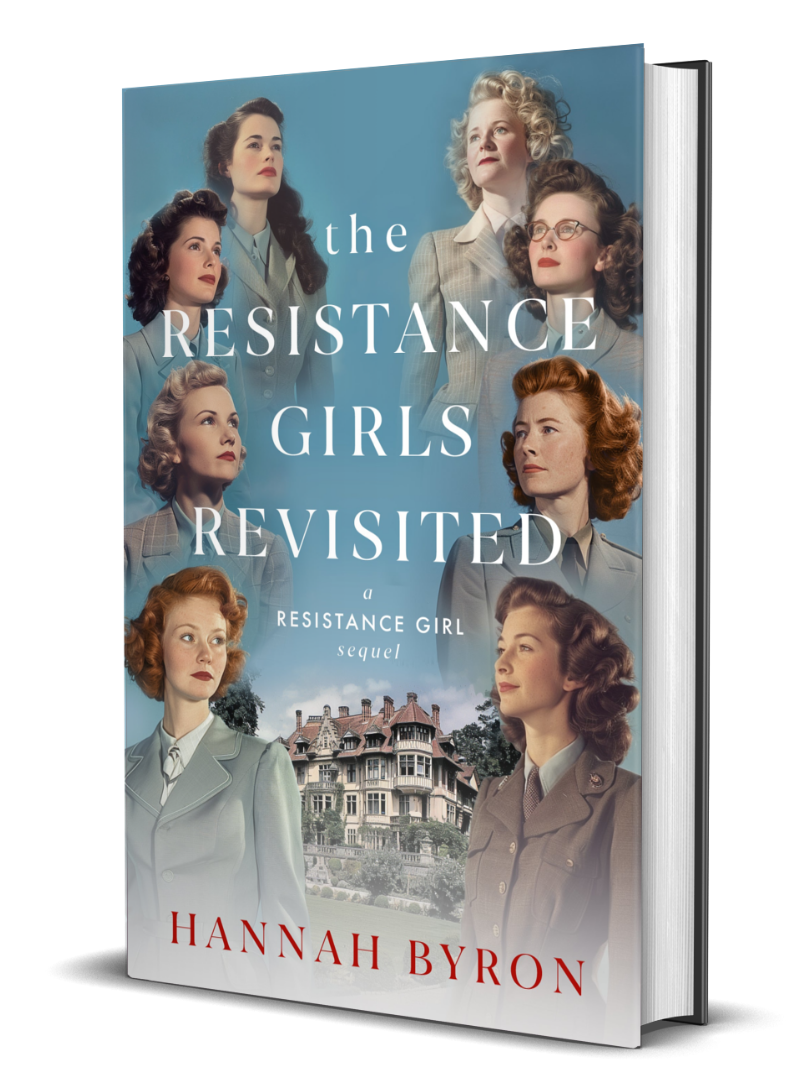
To commemorate this milestone, I'm offering a special promotion on the entire series.
From 1 July to 16 July, you can purchase all eight Ebooks in The Resistance Girl Series (so including the preorder!) at a special sale price worldwide. This is a unique opportunity to dive into the resistance girl world or to complete your collection at a discounted rate.
Why You Shouldn’t Miss This Sale:
Revisit the Journey: If you’ve already been captivated by the first seven books, now is the perfect time to revisit the stories and refresh your memory before diving into the epic conclusion.
Perfect for New Readers: If you’ve heard about The Resistance Girl Series but haven’t had the chance to start reading, this sale offers the perfect opportunity to get all eight books at an unbeatable price.
Worldwide Availability: No matter where you are in the world, you can take advantage of this special offer.
About The Resistance Girls Revisited
The Resistance Girls Revisited brings the saga of the eight heroines of the earlier books to a dramatic and satisfying close, filled with unexpected twists, emotional moments, and unforgettable characters. It’s a tribute to the strength and courage of the women in the world wars breaking barriers and making history. They have inspired thousands of readers throughout the series.
How to Get Your Discounted Copies
Starting 1 July you can click on the button under every book below that will take you straight to the Amazon of your choice to purchase the ebook. The sale will be automatically applied, so you can enjoy the reduced prices without any hassle.
Be sure to act fast, as this promotion ends on 16 July.
The final book (both ebook and paperback) The Resistance Girls Revisited will go live on 16 July and will be on sale for only 1 day after publication. So get the pre-order now!!
I want to thank each and every one of you for your incredible support throughout this journey. Your enthusiasm and love for The Resistance Girl Series have made this all possible. I hope this special sale brings joy to both new readers and long-time fans alike.
Get ready to immerse yourself in the resistance girl world once again, and mark your calendars for the release of the eBook of The Resistance Girls Revisited on 16 July! Like all the other books in the series, Book 8 will also be available in Kindle Unlimited.
Happy Reading.


The Resistance Girls
Revisited
Book 8 of 8 in The Resistance Girl
Series, 1948

Launching my new series: Timeless Agents
I’m thrilled to share with you the first impressions of my upcoming new series "Timeless Agents". You may have already noticed a new section on my website dedicated to this series. What can you expect? In this blogpost we’ll dive a little deeper into what “Timeless Agents” is all about.
Introduction
I’m thrilled to share with you the first impressions of my upcoming new series "Timeless Agents".
Let me start with unveiling a new section on my website dedicated to the new series here. This historical fiction series promises to take you on a journey through time, linking the courageous tales of World War II's female agents of SOE Section France with the modern struggles and triumphs of contemporary women.
Series Description
"Timeless Agents" invites you to explore the phenomenal courage of the 40 female secret agents of the Special Operations Executive (SOE) French Section during World War II. Set against the backdrop of one of history's most turbulent periods, the series brings to light the daring exploits and untold stories of these extraordinary women. They were the first women soldiers, fighting mostly alone without the protection of an army and under incredible stress of being arrested by the Gestapo.
In every book a contemporary fictive woman stumbles upon the account of one of these real secret agents and can’t wait to find out more. As they explore, we go back in time with them and learn about the missions these real women undertook in the middle of German-occupied France. The eyes of contemporary protagonists are opened to the true meaning of resilience, freedom, and courage of women more than eighty years ago and the effects it has on the choices they make in their lives today.
In this dual timeline series we follow two women per book, whereby the contemporary woman takes the lead to explore the lives and missions of these Resistance heroines. As the secret agents not always returned alive, I’ll make sure a tender love story blossoms in the contemporary storyline, weaving together the universal struggles of women across generations.
A Commitment to Authenticity
As an author of Historical Fiction about WW2 Resistance Women, I am deeply committed to presenting a more diverse and accurate portrayal of history. Unlike traditional narratives that often overlook the contributions of women and minorities, this series will shine a spotlight on the remarkable feats of these unsung heroines. And my fictional contemporary women will be from all walks of life, exploring their own historical roots.
While "Timeless Agents" remains grounded in historical events, it is essential to remember it is a work of fiction. I have taken liberties with historical details to craft a compelling narrative, but every effort has been made to honor the bravery and sacrifice of these female agents authentically.
Honoring the Fallen
It's important to acknowledge the sacrifices made by these courageous women, including the 15 who did not return home, having perished in German captivity under horrific circumstances. While their deaths will not be depicted in detail within the books, resources will be provided for readers who wish to further explore their stories.
I Hope You Will Like this New Series
Through the pages of "Timeless Agents," you are invited to escape on a thrilling adventure through 20th-century history, where female courage knows no bounds, and the legacy of these agents will shine forever more.
Timeless Agents promises to be an adventure of espionage, spunk, significant others, and sacrifice. Preorder your copies today and prepare to be transported to a world where heroines are forged, and history is rewritten.
As many fictional and non-fiction books have been written about some of these heroines who have become famous, like Virginia Hall, Nancy Wake, Noor Inayat Khan and Violette Szabo, I have chosen to write the first books about lesser known but equally brave agents.
First Two books on Preorder
The first two books in the "Timeless Agents" series are now available for preorder:
"The Color of Courage: Charting History, Painting Destiny, A Spirited Graffiti Artist Unravels Lise de Baissac’s WWII Secret Missions."
Coming 24 October Preorder here
"The Echo of Valor: From Lost Legacies to Found Fortunes: Two Women, Two Journeys, One Echo of Valor. The Story of Eileen Nearne.
Coming 27 February 2025 Preorder here


Read the First Chapters of “The Resistance Girls Revisited”
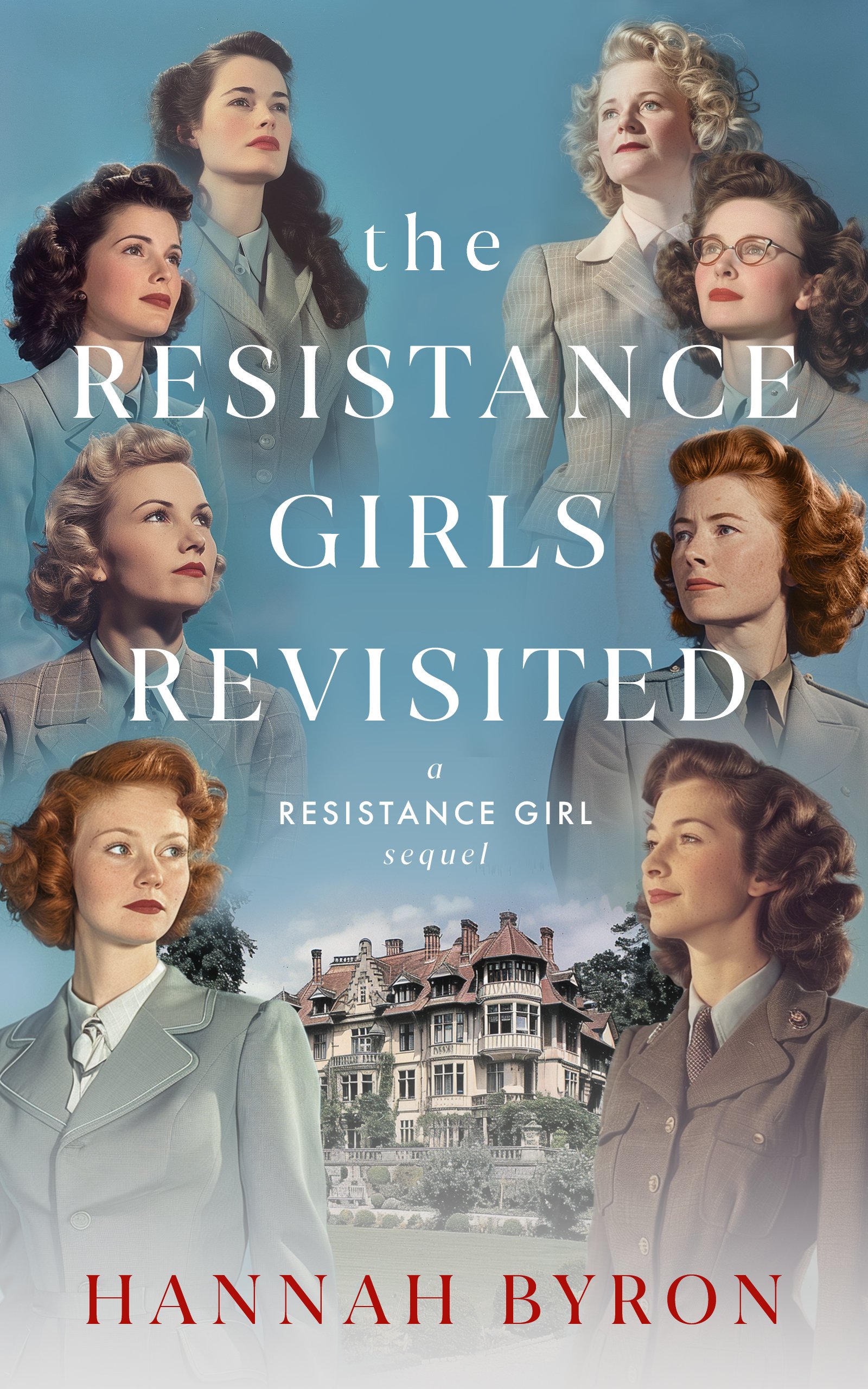
Greetings, readers and fans of The Resistance Girl Series! Exciting news awaits as I announce the arrival of the much-anticipated final book in the series, The Resistance Girls Revisited: A Reunion of Courage and Bond.
Prepare to immerse yourself once again in the extraordinary lives of Lili, Océane, Esther, Sable, Edda, and Anna as they reunite at the picturesque Swiss finishing school where their paths first intertwined before World War II.
Set partly in Le Manoir, Switzerland, in 1948, three years after the tumultuous end of the war, our six heroines, alongside mothers Agnès and Madeleine, gather to honor their enigmatic headmistress, Madame Paul, on her 40th year of leadership. Amidst the breathtaking backdrop of the Swiss Alps, they come together to reminisce and celebrate their shared experiences, braving the trials of war and forging unbreakable bonds of friendship.
In this emotional reunion, the women share their gripping tales of wartime bravery, from the chaos of battlefields to the secrecy of covert operations. Their stories, inspired by real events, weave a rich tapestry of courage, sacrifice, and resilience, showcasing the indomitable spirit of the female heart in the days of peril.
As a teaser, I offer an exclusive sneak peek into The Resistance Girls Revisited. Click the link below to read the first three unedited chapters of the girls’ captivating journey through their past and into the future.
Don’t miss the thrilling conclusion to The Resistance Girl Series. Join all the girls, now mature married mothers, as they embark on their final adventure, rediscovering the true meaning of courage, love, and the enduring power of friendship.
On 16 July 2024 we will celebrate the ultimate closure to The Resistance Girl Series. After that, I truly hope you will embark with me on a new series about female resistance fighters: The Timeless Spies Series.
But first things first, as we revisit the remarkable journey of our cherished heroines.

Unveiling “The London Spymaker”: Book 7 in The Resistance Girl Series
The moment has arrived! I’m so happy to announce the release of my newest book “The London Spymaker". Set against the backdrop of World War II, this gripping tale of espionage, betrayal, and passion promises to captivate your imagination and tug at your heartstrings.
”The London Spymaker” is currently available at the low price of $4.99 for just a few more days. Don’t miss out on the latest book in “The Resistance Girl Series”. Grab your copy of “The London Spymaker” today and embark on an unforgettable journey through the shadows of wartime London and post-war Germany.
The moment has arrived! I’m so happy to announce the release of my newest book, “The London Spymaker,” the 7th book in “The Resistance Girl Series”. Set against the backdrop of World War II, this gripping tale of espionage, betrayal, and passion promises to captivate your imagination and tug at your heartstrings.
In “The London Spymaker,” we delve into the tumultuous world of Anna Adams, the indomitable spymistress of Baker Street Headquarters. Anna’s duty is to recruit female secret agents to be sent behind enemy lines in France, navigating a web of secrecy, love, and duty in wartime London.
However, Anna’s world is turned upside down when her former boyfriend, the Polish fighter pilot Major Henryk “Hubal” Pilecki, reenters her life. Torn between her undeniable feelings for Hubal and her duty to marry the British Count Roderick Macalister to erase all traces of her past, Anna is faced with an impossible choice.
As the war rages on, Anna’s decisions lead to catastrophic consequences, with her female agents disappearing without a trace. In the aftermath of the war, Anna embarks on a quest to uncover the fates of the women she sent to their deaths, while confronting her own troubled past and mysterious protector.
But don’t just take my word for it! Here’s what some early reviewers had to say:
1. “A really wonderful book! WWII Historical that is intriguing and heartbreaking. Lots of twists and turns and tragic events in this unpredictable haunting story make this a real page-turner and a must-read.”
2. “Highly Recommend This Series. Another riveting, well-researched resistance story by Hannah Byron. It shows a different side to the WW2 story, especially events immediately after the end of the war. Highly recommend this series, this is book 7.”
3. “This book by Hannah Byron is the best out of the whole series, so detailed descriptions, something just connected with me in this read to keep it one of my top 5 books this year. A KEEPER!”
4. “I Suggest You Read the whole Series and Be Swept Away. This is a story that will have you captivated from the very first page. Honestly, I never knew I could get into historical stories but this series has really captured my heart.”
And the best news yet? “The London Spymaker” is currently available at the low price of $4.99 for just a few more days before it goes up to $6.99. Whether you prefer ebook, paperback, or Kindle Unlimited, now is the perfect time to dive into this enthralling tale of courage, sacrifice, and redemption.
Don’t miss out on the latest book in “The Resistance Girl Series”. Grab your copy of “The London Spymaker” today and embark on an unforgettable journey through the shadows of wartime London and post-war Germany.

Celebrate Women's History Month with My Inspiring YouTube Series!

March is Women's History Month, a time to honour the incredible contributions and achievements of women throughout history. To commemorate this special occasion, I’ve launched a Women's History Month playlist series on YouTube!
I’d love for you to watch as I shine a spotlight on the remarkable stories of trailblazing women from all walks of life. From pioneers in science and technology to leaders in activism and the arts, each video in this series gives a short overview of the lives and legacies of extraordinary women who have shaped our present-day world in profound ways.
Whether you're familiar with their names or discovering them for the first time, these inspiring stories will lift a tip of the veil of their enduring impact.
Please watch and subscribe to my YouTube channel. After Women's History Month, I’ll return to my own heroines of the WW2 Resistance to tell you more about remarkable women in history who continue to inspire with their legacies.
Let's celebrate the past, empower the present, and inspire the future. Don't miss out on this empowering journey through Women's History Month but be part of it.

Unraveling the Enigma of Herschel Grynszpan: A Tale of Controversy and Intrigue

Herschel Grynszpan after his arrest in Paris in 1938
In the annals of history, certain figures emerge whose stories are shrouded in controversy and intrigue. Herschel Grynszpan, a name perhaps unfamiliar to many, stands as one such enigmatic figure. His life, marked by a fateful act of defiance against the Nazi regime, has sparked debates, theories, and even conspiracy theories surrounding his fate. In this exploration, we delve into the life of Herschel Grynszpan, the controversy surrounding his death, and the tantalizing possibility of his survival.
Herschel Grynszpan was born in Hanover, Germany, in 1921, to a Polish-Jewish family. His life took a dramatic turn on November 7, 1938, when he shot and killed Ernst vom Rath, a German diplomat in Paris. This act of political assassination was Grynszpan's response to the escalating persecution of Jews in Germany, culminating in the violent events of Kristallnacht, also known as the Night of Broken Glass. The repercussions of Grynszpan's actions reverberated far beyond the streets of Paris, igniting a firestorm of Nazi propaganda and providing Adolf Hitler with the pretext for further anti-Semitic measures.
However, it is not Grynszpan's act itself that has captured the imagination of historians and conspiracy theorists alike, but rather the circumstances surrounding his subsequent fate. Official records indicate that Grynszpan was arrested by French authorities shortly after the assassination and was later extradited to Germany. Yet, what transpired after his extradition remains a matter of speculation.

However, it is not Grynszpan's act itself that has captured the imagination of historians and conspiracy theorists alike, but rather the circumstances surrounding his subsequent fate. Official records indicate that Grynszpan was arrested by French authorities shortly after the assassination and was later extradited to Germany. Yet, what transpired after his extradition remains a matter of speculation.
Some historians argue that Grynszpan was executed by the Nazis, his fate sealed in the shadows of a Gestapo prison. However, others contend that he may have survived, his death staged to conceal his true whereabouts. This theory is fueled by a lack of concrete evidence regarding Grynszpan's demise, as well as the clandestine nature of Nazi operations during that period.
Adding another layer to this intricate tapestry of history and mystery is the portrayal of Herschel Grynszpan in "The London Spymaker," my new historical fiction novel. In this gripping tale, Grynszpan's story is interwoven with that of a fictitious character, Anna Adams, his cousin, who finds herself ensnared in a web of danger and suspense as she and her family are pursued by Nazi agents seeking retribution.
Through the lens of fiction, "The London Spymaker" explores the untold possibilities surrounding Grynszpan's fate, inviting readers to ponder the enigma of his disappearance and the potential ramifications of his survival. As Anna Adams navigates a world fraught with peril and deception, the specter of Herschel Grynszpan looms large, a symbol of resistance against tyranny and a reminder of the enduring quest for truth amidst the shadows of history.
In conclusion, Herschel Grynszpan remains an enigmatic figure whose legacy continues to captivate and intrigue. Whether he met his demise at the hands of the Nazis or managed to evade their grasp and disappear into obscurity may never be definitively known. Yet, his story serves as a poignant reminder of the power of individual defiance in the face of oppression, and the enduring quest to unravel the mysteries of the past.
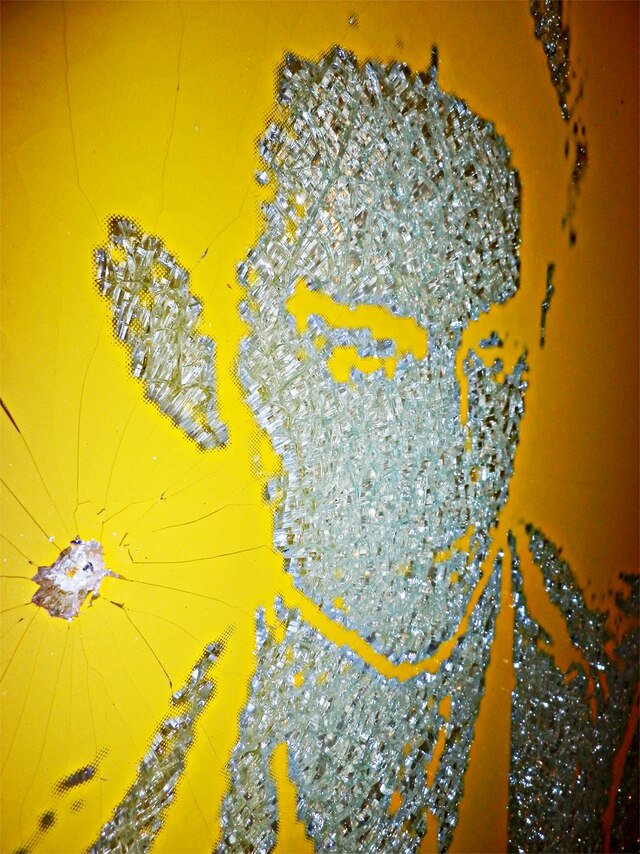
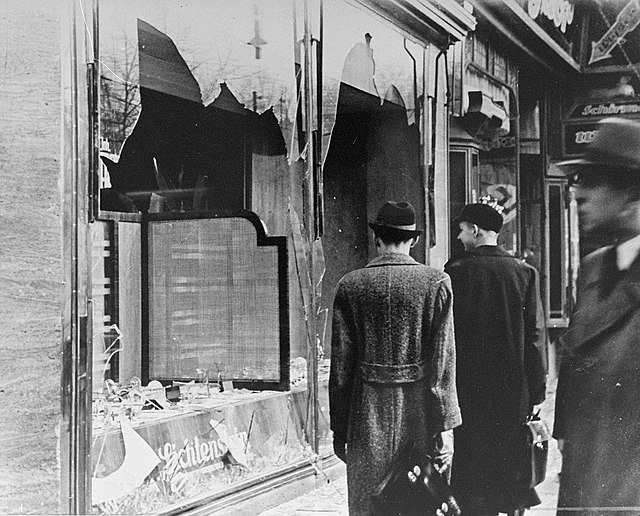
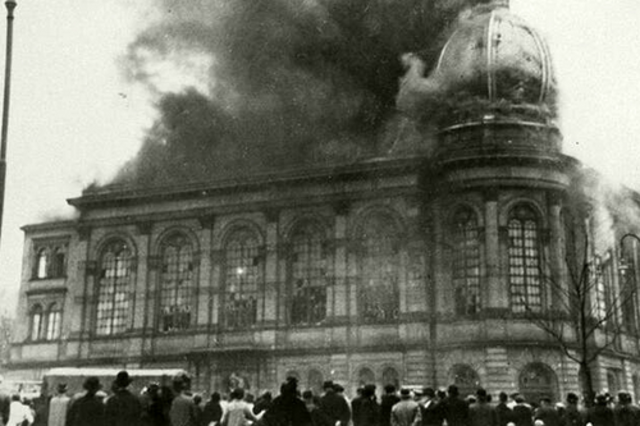
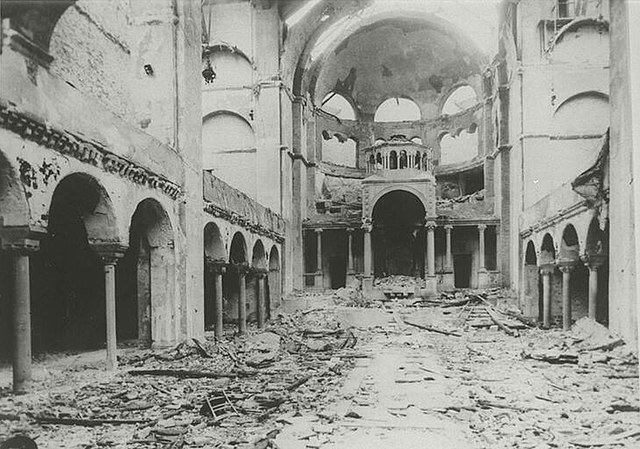
Left to right.
Detailed view of crystal structure of Grynszpan’s face with hammer blow glass breakage. Art work by Johannes Angerbauer-Goldhoff to remember the Kristallnacht and Herschel Grynszpan’s unintended roll in it.
German citizens walk past destroyed Jewish shops and houses on 10 November 1938, the day after Kristallnacht.
Börnerplatz synagogue in Frankfurt am Main was set on fire by a Nazi mob during Kristallnacht. The photograph was taken the next day when the synagogue was still burning.
Interior view of the destroyed Fasanenstrasse Synagogue, Berlin.

My new book The London Spymaker offers a tantalizing glimpse into the world of Herschel Grynszpan, blending fact with fiction to craft a narrative that is as thrilling as it is thought-provoking. As the debate over Grynszpan's fate rages on, one thing remains certain: his legacy will continue to inspire and intrigue for generations to come. it stand out

Reflecting on the Legacy of the Nuremberg Trials
The Nuremberg Trials represent the first international effort to hold individuals accountable for crimes against humanity. Convened in the aftermath of World War II, these trials sought to bring justice to those responsible for the atrocities committed during the war, including genocide, crimes against peace, and war crimes. However, the legacy of the Nuremberg Trials is not without its complexities and controversies.
The Nuremberg Trials stand as a watershed moment in human history, representing the first international effort to hold individuals accountable for crimes against humanity. Convened in the aftermath of World War II, these trials sought to bring justice to those responsible for the atrocities committed during the war, including genocide, crimes against peace, and war crimes. As we reflect on the legacy of the Nuremberg Trials, it becomes clear that they not only established crucial principles of international law but also shaped the course of modern justice and human rights.
Nuremberg Trials - the defendants dock
The Nuremberg Trials, held from 1945 to 1946, marked a radical departure from previous approaches to addressing war crimes. Instead of merely punishing the defeated, the trials aimed to provide a fair and transparent legal process that would serve as a model for future efforts to uphold human rights and prevent impunity. This ground-breaking approach was enshrined in the Nuremberg Principles, which laid the foundation for modern international criminal law.
Central to the Nuremberg Trials was the concept of individual responsibility for crimes against humanity. For the first time, political and military leaders were held personally accountable for their actions, regardless of official orders or directives. This principle, articulated in the famous Nuremberg Charter, established a precedent that has since been applied in numerous international tribunals, including the International Criminal Court.
Moreover, the trials played a crucial role in defining the legal framework for prosecuting genocide. The indictment of Nazi leaders for their role in the Holocaust set a precedent for recognising genocide as a distinct crime under international law. This recognition paved the way for subsequent efforts to prevent and punish genocide, including the establishment of the Genocide Convention in 1948.
Beyond their legal significance, the Nuremberg Trials also served as a catalyst for broader conversations about justice, accountability, and reconciliation. By bringing perpetrators of war crimes to trial in a public forum, the trials provided a platform for survivors to share their stories and seek closure. They also helped to foster a collective reckoning with the horrors of the Holocaust and the need to confront the legacy of anti-Semitism and xenophobia.
However, the legacy of the Nuremberg Trials is not without its complexities and controversies. Critics have pointed to issues such as the selective prosecution of war crimes and the influence of political considerations on the judicial process. Moreover, the trials were limited in scope, focusing primarily on Nazi leaders while largely overlooking the complicity of other actors, including collaborators and bystanders.
Despite these challenges, the Nuremberg Trials remain a landmark moment in the quest for justice and human rights. They remind us of the importance of holding perpetrators accountable for their actions, regardless of their status or position of power. They also underscore the enduring relevance of international law as a tool for promoting peace, justice, and reconciliation in a world scarred by conflict and injustice.
As we look back on the legacy of the Nuremberg Trials, let us reaffirm our commitment to upholding the principles of justice, accountability, and human rights that they helped to establish. By learning from the past and building on its lessons, we can strive to create a more just and peaceful world for future generations.
Prosecutors and Deputies on Staff of Brig. Gen. Telford Taylor, subsequent Nuremberg Trials
A Critical Perspective on the Gender and Race Disparity
Beneath the veneer of justice to hold individuals accountable for crimes against humanity lies a stark reality: the trials were an all-white, male affair, with women and people of color relegated to non-decision-making roles such as reporters and secretaries. This gender disparity is not just a footnote in history but a glaring example of the systemic exclusion of women and people of color from positions of power and influence, even in matters of justice and accountability. Despite the gravity of the crimes being prosecuted, the composition of those involved in the trials reflected the deeply entrenched gender biases of the time.
Judges of the Nuremberg Military Tribunals
At the heart of the Nuremberg Trials were the prosecutors, judges, and defense attorneys – all of whom were white men. While the supportive female contributions as typists, secretaries and reporters were undoubtedly valuable, they were confined to positions that lacked decision-making authority.
This gender disparity is particularly striking when considering the magnitude of the crimes being addressed, including genocide and crimes against humanity. Yet, the absence of women from positions of power meant that their perspectives and experiences were largely overlooked in the pursuit of justice.
Moreover, the exclusion of women from decision-making roles in the Nuremberg Trials sends a troubling message about who holds the authority to shape narratives of history and memory. By relegating women to the sidelines, the trials reinforced the notion that matters of justice and accountability were the domain of men – a narrative that persists in many spheres of society to this day.
Only one woman in the pressroom
It's important to recognize that the gender and race disparity in the Nuremberg Trials was not simply a product of the times, but a reflection of deeper inequalities that continue to persist. Even as we commemorate the legacy of the trials and celebrate their role in establishing principles of international law, we must also acknowledge the voices that were silenced and marginalized in the process.
Moving forward, it is imperative that efforts to promote justice and accountability are inclusive and representative of all voices, regardless of gender or race. This means actively working to dismantle the systemic barriers that exclude all minorities from positions of power and ensuring that their perspectives are central to the pursuit of justice.
In revisiting the history of the Nuremberg Trials, let us not only honor the memory of those who were lost but also commit to creating a more just and equitable future – one in which all voices are heard, and all individuals are given the opportunity to participate fully in the pursuit of justice.

From Ruins to Rivalry: The Division of Post-War Germany in 1945
The division of post-war Germany in 1945 was a complex and multifaceted process. Initially intended as a temporary occupation, instead setting the stage for decades of Cold War rivalry between East and West.
The London Spymaker starts in 1945 and follows the Allies' pursuit of justice against Nazi war criminals. Squadron Officer Anna Adams embarks on a mission to locate her secret agents who failed to return to Britain after the war's end.
The timeline in The London Spymaker
The release date for my upcoming book, the 7th book in The Resistance Girl Series titled The London Spymaker, is set for April 2nd and is currently available for preorder. The story starts in 1945 after the German surrender, delving into Anna Adams' life before and during the war in later parts of the book.
Beginning with a Prologue set in 1937, the start of the book follows the Allies' pursuit of justice against Nazi war criminals while safeguarding Europe from another German conflict by dividing the country. Squadron Officer Anna Adams embarks on a mission to locate her secret agents who failed to return to Britain after the war's end.
In the weeks ahead, I'll be releasing several blogs pertaining to the themes explored in the new book. This initial blog focuses on the Allies' partitioning of Germany following its capitulation.

Why divide post-war Germany in 4 occupational zones?
In this blogpost we’ll take a closer look at the reasons for dividing Germany into occupational zones monitored by Great Britain, the United States, France and the Soviet Union.
In the wake of World War II, as the dust settled and the echoes of battle faded away, the world found itself facing a new challenge: the division of Germany. The year 1945 marked the end of Nazi Germany, but it also signaled the beginning of a new chapter in German history – a chapter characterized by division, rivalry, and the eventual Cold War confrontation between the Western Allies and the Soviet Union. Let’s explore the events that led to the division of post-war Germany and the consequences that followed.
Yalta Conference (Churchill, Roosevelt, Stalin)
The Yalta and Potsdam Conferences
The seeds of division were sown during the Yalta Conference in February 1945, where Allied leaders Winston Churchill, Franklin D. Roosevelt, and Joseph Stalin gathered to discuss the future of Europe after the defeat of Nazi Germany. It was here that the groundwork for the division of Germany was established. The Allies agreed to divide Germany into four occupation zones, with each of the major Allied powers – the United States, Great Britain, France, and the Soviet Union – administering one zone.
Potsdam Conference July 1945 (Attlee, Truman, Stalin)
The division was further solidified during the Potsdam Conference in July and August 1945, where the Allied leaders revisited the issue. The conference confirmed the division of Germany into occupation zones, with the city of Berlin, located deep within the Soviet zone, also being divided into four sectors. This division was intended to be temporary, with the goal of demilitarizing and denazifying Germany, as well as holding war criminals accountable.
The Emergence of Ideological Rifts
While the division of Germany was initially seen as a temporary measure, it quickly became apparent that the Allies had different visions for the post-war future of the country. The ideological differences between the Western Allies and the Soviet Union began to crystallize, setting the stage for the Cold War.
In the Western zones, efforts were made to establish democracy and a free-market economy. The introduction of the Marshall Plan in 1948 provided significant financial aid to Western Europe, including West Germany, aimed at promoting economic recovery and preventing the spread of communism. Meanwhile, in the Soviet zone, the focus was on establishing a socialist system under Soviet influence.
Marshall Plan poster
East (red) and West (blue) Germany October 1949 - July 1952
The Berlin Blockade and the Formation of Separate German States
One of the key turning points in the division of post-war Germany was the Berlin Blockade, which began in June 1948. In response to Western efforts to consolidate their zones and create a separate West German state, the Soviet Union blockaded access to West Berlin, attempting to starve the city into submission. In response, the Western Allies launched the Berlin Airlift, providing essential supplies to West Berlin via air.
Children in East and West Berlin
This standoff solidified the division between East and West. In May 1949, the Federal Republic of Germany, commonly known as West Germany, was officially established in the Western zones, while the German Democratic Republic, or East Germany, emerged in the Soviet zone in October 1949.
Conclusion
The division of post-war Germany in 1945 was a complex and multifaceted process that resulted from a combination of geopolitical considerations, ideological differences, and the legacy of World War II. What was initially intended as a temporary occupation soon became the defining feature of Germany's post-war landscape, setting the stage for decades of Cold War rivalry between East and West. The division of Germany would not be resolved until the fall of the Berlin Wall in 1989, but its impact on the course of history remains significant, serving as a stark reminder of the consequences of war and the challenges of post-conflict reconstruction.
West and East Germans at the Brandenburg Gate in 1989

The Partisan Fighter: A Tale of Courage and Liberation
Join this thrilling adventure by diving into The Partisan Fighter, a story that is exclusively available to subscribers of my newsletter.
The Partisan Fighter is the heroic metamorphosis of a capricious, starry-eyed teenager into a death-dealing resistance fighter. Buckling down in a camouflage outfit, the upper-class heiress is hell-bent on bringing Liberté back to country and castle again.
Introduction
In the midst of the chaos and darkness that engulfs Europe during World War II an unlikely heroine emerges: a young French couture designer named Daphne de Dragoncourt. Her journey from a privileged life in Paris and Picardy to the heart of the resistance movement is a story of courage, transformation, and the fight for freedom. Join this thrilling adventure by diving into The Partisan Fighter, a story that is not for sale but exclusively available to subscribers of the Hannah Byron newsletter.

The Rainbow Couturier
Daphne de Dragoncourt is anything but the epitome of traditional French sophistication. With a penchant for risqué combinations and bold patterns inspired by the vibrant colors of her pet macaw, Liberté, she is a breath of fresh air in the world of couture dominated by black-and-white Chanel. Daphne’s dream is to leave behind her complicated family life and shine brightly on the catwalks of French fashion.
Hitler’s Invasion
However, Daphne’s dreams are shattered when Hitler’s forces invade Northern France in May 1940. The Dragoncourt family’s Château is overrun by German boots, and to make matters worse, her beloved macaw, Liberté, escapes during the chaos. Daphne finds herself fleeing into the fields of Picardy, stranded and alone.
A Chance Encounter
In the midst of her despair, Daphne stumbles upon a wounded resistance fighter named Paul Bâh, a Congolese-born merchant from Paris with a fierce appetite for warfare. Instead of fashioning garments with a needle and thread, Paul hands Daphne a German-snatched MP 40 gun and begins teaching her to wield it effectively.
Becoming Simone
With Paul by her side Daphne adopts the code name ‘Simone Charlet.’ Together with their motley crew of partisan fighters, they engage in daring clashes with the Nazi forces from Paris to Picardy. As Simone, the once capricious and starry-eyed teenager Daphne, transforms into a fearless resistance leader, ready to risk it all for her country and her castle.
Liberation and Reunion
As the war rages on, the Partisan movement is eventually reinforced by the D-Day landings, and together with the Allies, they bring an end to four years of German terror. Through determination and sheer willpower, Simone and her comrades fight valiantly to liberate their homeland.
The Triumph of Liberté
The Partisan Fighter is a remarkable tale of transformation, resilience, and the indomitable spirit of those who fought for freedom during World War II. Daphne de Dragoncourt’s journey from a couturier to a resistance fighter is a testament to the human capacity for bravery and adaptability in the face of adversity. As we follow Simone’s path, we are reminded that even in the darkest of times, the pursuit of liberty can lead to extraordinary heroism.

The Partisan Fighter is the free companion novella to the 7 books of The Resistance Girl Series.
Join my newsletter to exclusively experience this captivating story of courage and liberation.
But The Partisan Fighter is not just a historical account; it’s a tribute to the unwavering spirit of those who dared to cast off their jewels, their blueblood, and their privileges, all in the name of freedom. It is loosely based on the story of the real Partisan fighter Simone Segouin.