
Historical Facts & Fiction
Blog categories

Rotterdam: From Bombed-out to Best Travel City
The 15-minute bombing of Rotterdam led to the capitulation of the Netherlands. Hitler broke the valiant fight the small Dutch army had put up. Rotterdam’s historic centre was flattened, but the city became a modern architectural marvel after the war.
Introduction
In my soon-to-be released 6th novel in The Resistance Girl Series, The Crystal Butterfly, main character Edda Van der Valk is in Amsterdam when she hears on the radio about the bombing of nearby Rotterdam. Though Amsterdam is also suffering from intruding Germans both on the ground and in the air, the invasion of the Germans and the destruction of Rotterdam is a turning point in Edda. Abhorred, she starts a diary to register all the Germans are doing to her country. The seed of resistance is sown in her.
Amsterdam, 14 May 1940
I don’t know who will win this war, the Dutch, or the Germans, but I do not believe in the right of one country to attack another. It’s not that I’m against Germany. I have German blood myself, but I believe Holland should stay a sovereign country.
As I write this, I’m surprised at myself. I never take sides, not in a political sense, so why do I strongly feel sending bombers and dropping bombs on civilians is the worst way to create stability? Well, the answer is obvious from the question. A child could answer it.
So, Herr Hitler, you are terribly wrong, but I fear it will take a long time before either the world or you yourself will reach a full understanding of your blunder.
I will hide this diary carefully because I’m going to give Herr Hitler a piece of my thoughts every day. Not that he will ever listen to me, but maybe the world will one day.
Marchioness Edda Van der Valk.

Why was Rotterdam bombed?
Rotterdam was bombed by German bombers on 14 May 1940, and 711 people died. About 80,000 residents became homeless. The bombardment was the retaliation of the German invaders for the fights the Dutch troops put up, which had slowed down the German advance. The Netherlands surrendered to the Germans on 15 May 1940.
On the first day of World War 2 in the Netherlands, German paratroopers landed in the south of Rotterdam. However, the marines and units of the Army stationed in Rotterdam held their ground at the Maas bridges. The German war in the Netherlands turned out to be proceeding unexpectedly slowly. Hitler ordered Kampfgeschwader 54 to be deployed in the Netherlands to break the resistance in Rotterdam by all means.
The missed ultimatum
General Schmidt sent an ultimatum to Colonel Scharroo and to Mayor Oud, but Scharroo thought it was way too vague and did not intend to capitulate. Mayor Oud had difficulty connecting with General Winkelman and showed that the national interest came before the interest of the city.
Winkelman bought time by making Scharroo's argument about 'this scrap of paper' his own. A new and more official ultimatum was handed to Von Choltitz fifteen minutes before it expired.
General Schmidt ordered the planned 1:00pm artillery bombardment to be postponed but didn't receive the message that Kampfgeschwader 54 had taken off, so didn't take measures to have the red flares fired. He wanted Scharroo's surrender before 4:20 pm.
The Attack
Within minutes German Heinkel He 111 bombers appeared over Rotterdam. One squadron turned around after seeing red flares fired from Noordeiland directly ahead and dropped their bomb loads on areas below the flight path back to the departure bases, a common procedure to avoid explosion risks on landing.
Rotterdam's historic city centre was destroyed by 97,000 kilos of German high-explosive bombs in the year that it would celebrate its 600th anniversary. After the bombardment, Captain Bakker got through the centre to Colonel Scharroo's headquarters in Blijdorp and capitulated Rotterdam. Commander Wilson left for The Hague to request approval from General Winkelman.
Scharroo reported to the German lines half an hour before the end of the second ultimatum, at 15:50. He signed with 'angenommen', but the German Field Marshal Albert Kesselring ordered a second bombardment between 7:00 and 8:00pm.
General Kurt Student was hit by a beam after a stray projectile hit the command post. Dutch civilians were placed against the wall for a mass execution, but Von Choltitz prevented this mass murder.
The rain of bombs on Rotterdam was enormous, destroying 24,000 homes, 32 churches and 2 synagogues. 650-900 people died and 80,000 people became homeless.
Rotterdam's entire centre was a smouldering mess after the bombing, but several important buildings were spared. The rubble was cleared, and part of it was dumped in the water bodies of the Blaak and the Schie, as well as around and partly in the Kralingse Plas.
Rebuilding Rotterdam
Already in 1940 plans were made for the reconstruction of the city. The old Willemsbrug was also destroyed but was repaired quickly.
Without a historic heart, Rotterdam has a completely different cityscape than other Dutch cities, but today its heart is a thriving multi-cultural and artistic centre. Enough for Lonely Planet to call it Best Travel City in 2016.
Rotterdam 1940
Rotterdam today

WW2 Field Research to "Mussert's Wall" Netherlands
I invite you to join me on my field trip to Mussert’s Wall. Anton Mussert was the leader of the NSB. Learn more about World War 2 in Holland, about the Dutch NSB Party and Collaboration during WW2.
Unveiling the Dark Pages of History: The Dutch NSB Party and Collaboration during World War 2 in Holland.
In an upcoming blog I will shed light on the rise of De Nationaal-Socialistische Beweging, the National Socialist Movement (NSB), in the Netherlands before and during World War 2 and its collaboration with Hitler’s Germany.
The most controversial part of writing The Crystal Butterfly for me was Edda’s parents’ membership of the NSB and their support of Hitler’s ideology. I strongly felt, though–when writing a book on Holland in WW2–collaboration needed to be addressed. Most Dutch people remained neutral during the war, a small yet active part resisted and quite a significant number actively collaborated with the Nazis, whether or not they were a member of the NSB.
I went on a field trip to Mussert’s Wall. Anton Mussert was the leader of the NSB. I invite you to join me on my field trip using the video below.
In 2018 after a lot of debate it was decided that this wall shouldn’t be taken down, as it is an important remembrance for people what happened here. On my photograph you can see what it looks like today and compare it to when it was used over 80 years ago.
Mussert's Wall in 1940
Mussert's Wall in 2023
Feel free to comment below. Share your thoughts, knowledge, experiences. All appreciated!
And stay tuned for more research on WW2 in the Netherlands.
2023: the birth of a new book
New book, but also a new home and a new website. Years of research on European countries during World Wars NOT lost, and more to come! Did you know about Audrey Hepburn’s Dutch war years?
Since book 5 in The Resistance Girl Series, The Highland Raven, came out, I took a short break from writing about my main topic World War 2. In the interim I launched a new historical detective series, titled The Mrs Imogene Lynch Series. I also moved to another part of Holland at the end of December ‘22 and became a first-time grandmother in January. All very exciting but very distracting from my WW2 writing schedule! :-)
In January 2023 I began writing The Crystal Butterfly, my newest book in The Resistance Girl Series. This book is about the Dutch Resistance. It was a Godsent to be able this time to do all my groundwork ‘around the corner’ and I’ll share plenty of my (on the spot) research with you on this blog.
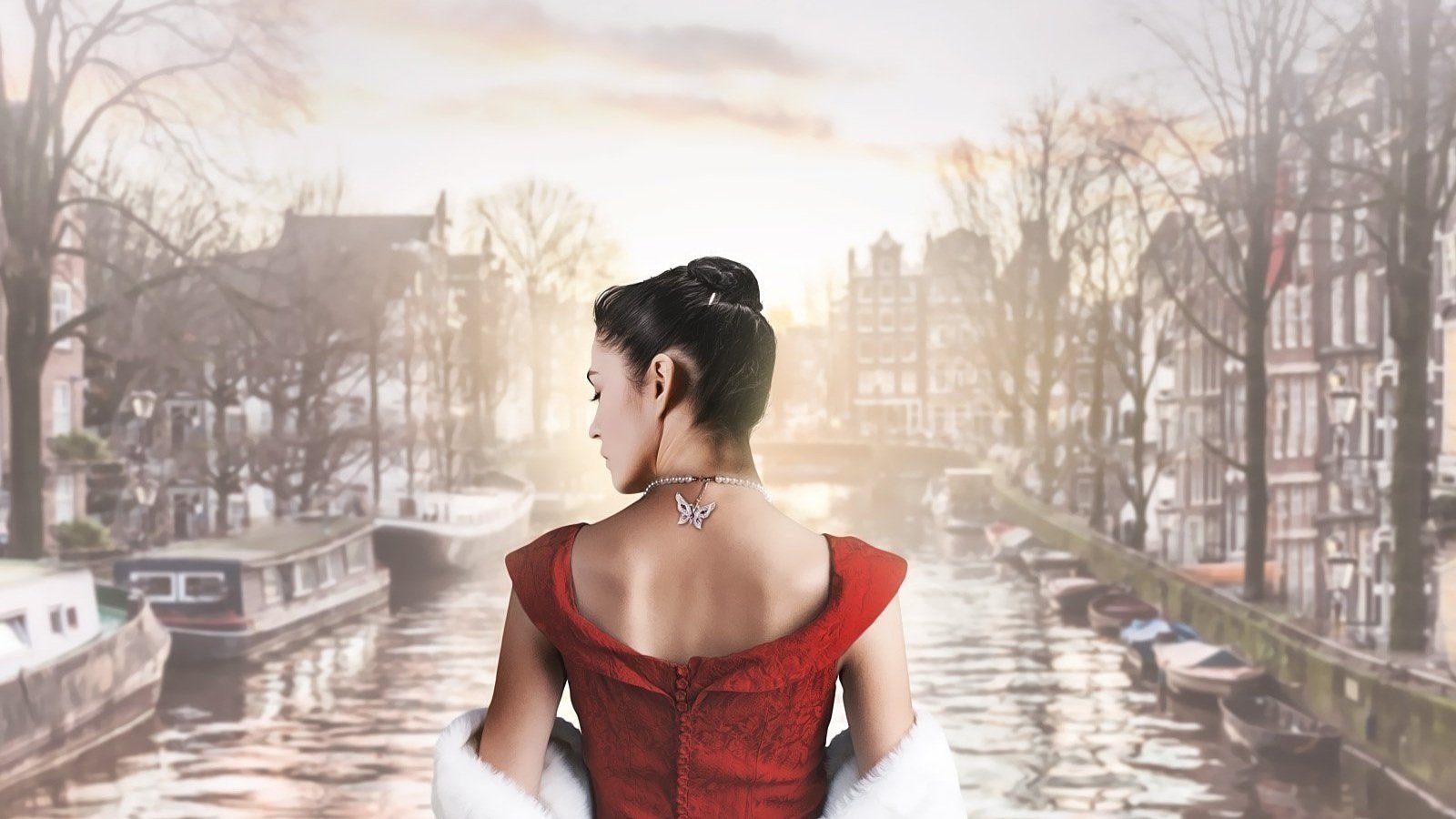
I took the time to deep-dive into the new story and get to the heart of my heroine’s journey before and during WW2. Her name is Edda Van der Valk and in The Crystal Butterfly she will take you through her Dutch war years.
As I now live close to Den Bosch - which is in the centre of Holland - I can easily travel to the most important places of action during WW2 in this country. So let me take you with me on my field trips as I retrace my steps to that gruesome part of our history, now some 80 years ago.
Few people living through WW2 are still with us today. The medalled-up veterans and bravely surviving Jews have become sparse centenaries, whose live presence in TV shows and newspaper articles are almost non-existent. WW2 is now almost history, lived through by the generation of our parents, grandparents, great-grandparents. But I still feel it is my duty to keep the history alive LEST WE FORGET.
The Crystal Butterfly is also inspired by - though far from identical to - Audrey Hepburn’s Dutch war years, so I’ll take you to places where she lived and spent some of the most arduous years of her life. And, of course, Anne Frank cannot be ignored in a book that is centred heavily on the deportations of Dutch-based Jewish people. After all, the arrest of Edda’s big love, Asher Hoffmann, was her reason for joining the Resistance.

PS For avid readers of my blog you may notice I have a new website and miss the abundant archive of years of research on many European countries during the World Wars. Fear not for it will return in an even clearer and more user friendly way.


Hello Reader
Welcome to Historical Facts & Fiction. Here imagination meets reality. I created this blog as a space to assemble my own research that had no place in my World War novels. Find out more about the background to The Resistance Girl Series!
Welcome to Historical Facts & Fiction. Here imagination meets reality. I created this blog as a space to assemble my own research that had no place in my World War novels. I hope you’ll enjoy finding out more about the background to The Resistance Girl Series.
Titbits of research certainly have their place in historical fiction, but when it becomes info dump, it’s too much. But in a blog there’s enough space to share all in-depth investigations and fieldwork to my heart’s content.
Most Historical Fiction readers are fervent researchers themselves; half the fun of reading a good HF novel is popping onto the net to fact-check what you’ve just read. You simply must know if SOE really had women spies, or if Eva Braun actually married Hitler hours before joining him in death. The internet is our treasure trove. I know I can’t stop myself, and love learning a thing or two in the process.
Have you ever wondered where HF authors get their ideas for a new book or series, or how they do their research? No two HF authors are alike – of course – but we all do rely heavily on today’s search engines. No work gets done without it.
However, as you’ll read in an upcoming blog post, my reason for starting The Resistance Girl Series was a family photo I found by chance. Curiosity is a good start. As a European with lineage in several countries, I not only study the lives of these people. They are in my bloodline.
My Great-uncles William and Jack Westcott
But it wasn’t just my uncles’ photograph that incited me to write In Picardy’s Fields. It may sound terrible to say - and I won’t do so aloud - but I love the World Wars. For me as a fiction writer these intense and dark periods in recent human history provide the greatest canvas on which to splash my stories, in an endless variety; this was the period – par excellence – in which ordinary people performed extraordinary deeds. And we all love us a decent hero(ine)!
I’m never tired of learning more about the first half of the 20th century and how it’s shaped our current society. So, please permit me to infect you with some of that passion.
Next to online studies, you can also join me on my field trips to various countries while I do my onsite research.
On to the first blog now…
Thank you for being here!